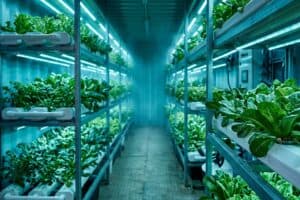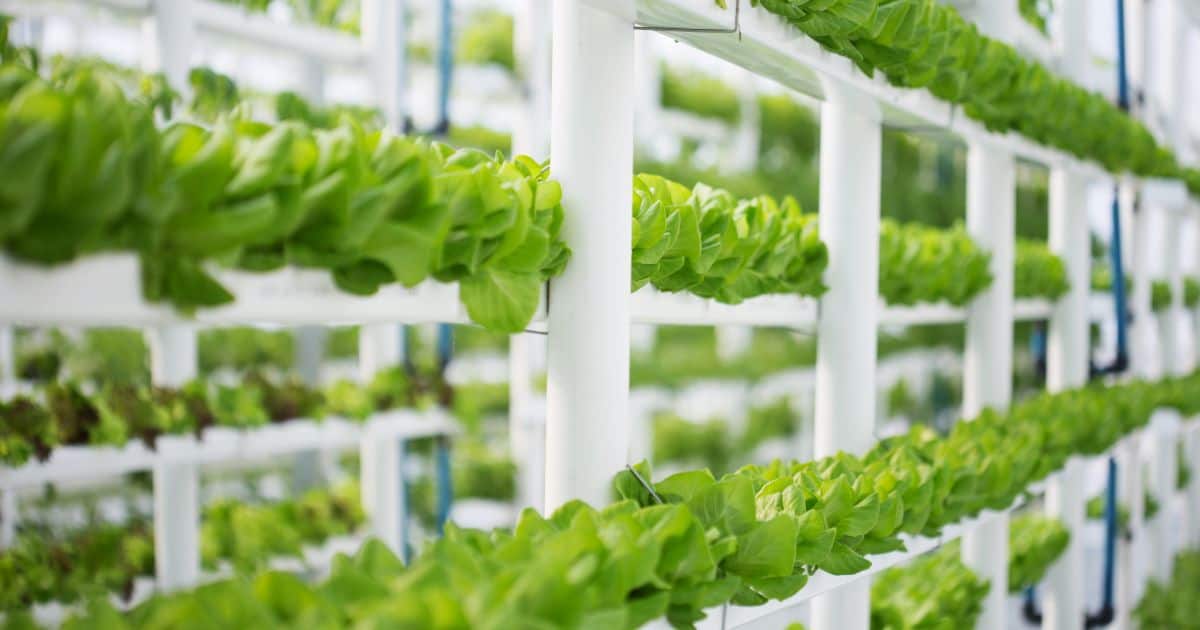
Not every crop earns its floor space indoors. Leafy greens and herbs earn their space on a vertical farm. They grow neatly on stacked racks and can be harvested often enough to give growers a steady supply for customers.
Many commercial growers choose indoor production because it supports a broad crop mix. Everyday favourites, fresh herbs, and speciality microgreens can all form part of the same production strategy, depending on customer demand.
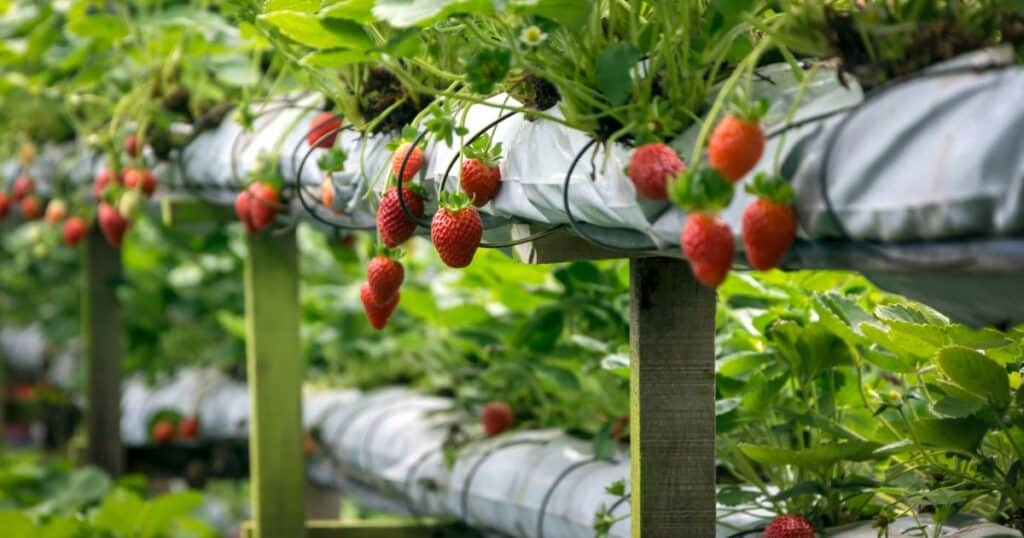
Strawberries occupy the system for longer and ask more from both the lights and the person looking after the crop, which can reduce the return.
Crop choice should follow buyer demand, not personal preference. A crop with a high sale price can still lose money once electricity, seed, nutrients, labour, pack materials, waste, and delivery enter the calculation. The container, crop system, and customer base must support the same plan.
Which crops are most suitable for a shipping container farm?
Indoor farms earn money from production space. Every shelf tied up by one crop is a shelf that cannot produce something else. Salad leaves, herbs, and microgreens return that space to production much sooner than fruit.
Fruit also demands brighter lighting, larger plants, and more labour before the first harvest arrives.
Crop | Typical crop window | Rack density | Light demand | Main sales route | Main commercial risk |
Lettuce | 40–60 days | High | Moderate | Retail and food service | Price pressure |
Rocket | 25–45 days | High | Moderate | Restaurants and premium retail | Short shelf life |
Baby spinach | 30–40 days | High | Moderate | Retail and food service | Heat sensitivity |
Baby kale | 40–65 days | High | Moderate | Retail and food service | Buyer volume |
Basil | 30–60 days | Medium | Moderate to high | Restaurants and food producers | Cold sensitivity |
Coriander | 60–70 days | Medium | Moderate | Restaurants and fresh-produce trade | Early flower formation |
Radish microgreens | 7–21 days | High | Moderate | Chefs and specialist retail | Hygiene and labour |
Strawberries | 8–10 weeks from transplant | Low | High | Direct retail and hospitality | Space, power, and labour |
Harvest dates can move from one crop to the next, even when sowing stays on schedule. Growers need to judge each batch against crop quality, sale size, and the conditions in the growing area.
Lettuce, rocket, spinach, kale, basil, and coriander ranges come from crop maturity guidance; microgreens often reach harvest within 7–21 days, while indoor strawberries need about 8–10 weeks from transplant to first fruit under suitable conditions.
The best crop groups for container farms
One successful harvest proves truly little. Consistent sales over weeks and months give a much better indication of whether a crop deserves valuable growing space.
1. Leafy greens: Lettuce, rocket, spinach, and baby kale
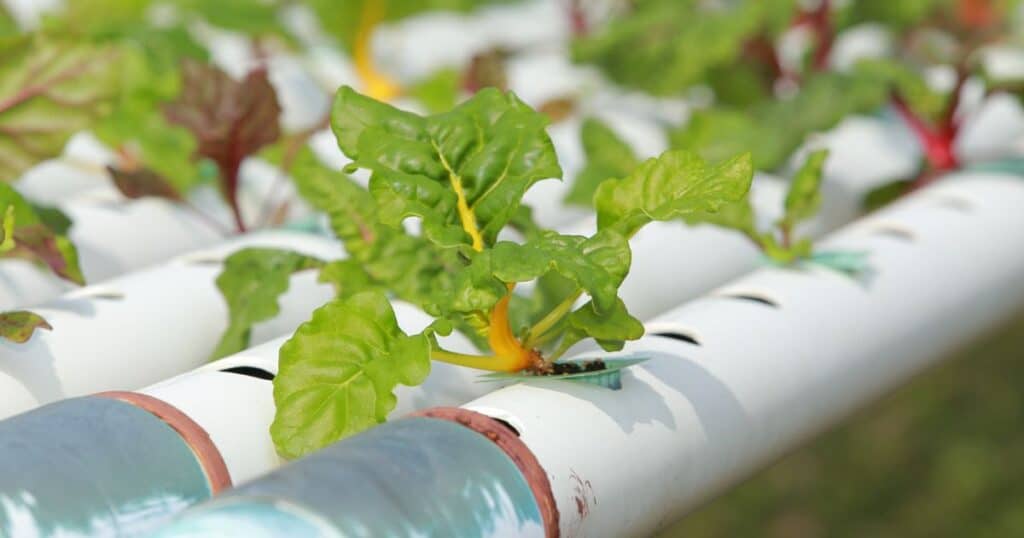
The value of leafy greens is not only in the crop itself. Lettuce, herbs, and spinach can fit into nutrient film systems, take up limited rack space, and move through production in batches that match regular orders.
Commercial pressure often appears after harvesting. Lettuce and baby leaves lose value when quality slips; delivery takes too long, or a buyer rejects size and appearance. Production should only begin once the order is specific enough to plan against.
Both parties need the same understanding of weekly quantities, packaging, grade, delivery dates, and rejected stock.
2. Culinary herbs: Basil, coriander, mint, and parsley
Herb production is not one category with one set of margins. Basil, coriander, mint, and parsley differ enough in crop time; harvest frequency and shelf life to warrant separate production and costing decisions. Controlled environments commonly include these herbs alongside leafy greens.
A restaurant route can offer repeat demand, but each customer often buys small volumes and expects frequent delivery.
Harvest labour, grade checks, pack preparation, and delivery can erode the margin. Cold storage can ruin a good basil harvest before it reaches the customer. Coriander creates a different risk, with unsuitable conditions often pushing the crop into early flowering.
3. Microgreens: Short cycles, premium prices, and strict hygiene
Microgreens can produce income from little vertical space, and the short crop cycle allows several harvests each month. Premium pricing only holds when the product has a reliable market beyond the occasional order.
Small costs become expensive over repeated planting cycles. Seed, preparation time, harvest labour, packaging, electricity, and spoilage can strip away the margin if the budget leaves any of them out.
High-quality microgreens rely on more than healthy growth. Clean production practices, documented traceability, and careful temperature control all form part of a commercial operation that values consistency as much as crop quality.
4. Strawberries and compact fruit crops: Test before scale
Crop selection starts with the production system, not the sales catalogue. Leafy varieties fit comfortably into compact vertical layouts, while strawberries and other fruiting crops need additional clearance to support healthy growth.
Commercial planning should account for both the physical requirements of the crop and the market it is intended to supply.
Higher light demand, trellises, pollination, plant trim, crop support, and a longer production period increase cost and labour. Each plant also occupies valuable rack volume for longer. A pilot crop offers a safer route than a large first commitment, especially before repeat orders and rejection standards are confirmed.
How to choose the right crop mix
A profitable crop mix begins with a customer, then moves through production fit, cost per sellable unit, and pilot results.
- Confirm the buyer. Record the product, weekly volume, pack size, grade, delivery day, realistic sale price, payment terms, and rejection policy.
- Check production fit. Compare crop period, rack area, light demand, harvest frequency, expected losses, and compatibility between crops in one controlled climate.
- Calculate every cost. Include electricity, water treatment, nutrients, seed, labour, pack materials, waste, repairs, delivery, finance, insurance, and rent where relevant.
- Prove the plan at small scale. Record output, rejected units, labour hours, energy demand, delivery cost, and repeat orders before more production capacity receives capital.
A restaurant that orders basil and rocket twice a week gives the farmer a defined target. The crop mix can then follow compatible climate needs, pack sizes, harvest days, and delivery frequency instead of market guesswork.
Crops that rarely justify container space
Technical possibility does not equal commercial sense. Large plants, long crop periods, low sale prices, or poor rack density can consume expensive climate-controlled space without enough revenue per square metre.
- Maize and wheat need broad area for low-value harvests.
- Potatoes and large root crops waste valuable stacked rack volume.
- Pumpkins and melons spread across space needed by compact crops.
- Commodity crops face margin pressure once power and labour enter costs.
Mushroom production falls outside a standard hydroponic vegetable setup. Its dependence on substrate, humidity, and controlled environmental conditions calls for separate technical and commercial consideration.
South African costs and practical factors to price first
Electricity can decide whether a container farm makes financial sense. Lighting, pumps, airflow, climate control, and backup power can contribute to what each saleable unit costs to produce.
Energy demand should be calculated before equipment is ordered. A realistic model requires local tariffs, projected daily hours, seasonal temperature changes, and the available response to power interruptions.
A consistent crop starts with a consistent water supply. Laboratory results provide the information needed to evaluate water chemistry, identify potential constraints, and support informed production decisions before the first tray is sown.
Water does more than just hydrate a hydroponic crop. It delivers nutrients, supports root health, and influences the consistency needed for reliable commercial production.
No two sites present the same conditions. Reviewing access routes, unloading areas, drainage, security measures, and available clearance before work begins supports safer installation and more predictable project planning.
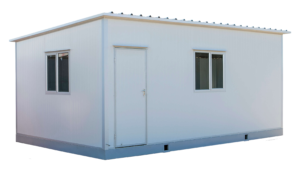
Container King supplies 3m, 6m, and 12m options and completes custom container conversions in South Africa. Crop type and farm equipment should guide the size, insulation, openings, electrical provisions, and water-line scope.
Frequently Asked Questions
What is the most profitable crop for a container farm?
There is no universal winner. Profit depends on sale price, crop period, rack area, electricity, labour, losses, delivery, and repeat demand. Lettuce can support volume, herbs can offer higher value per kilogram, and microgreens can offer short crop periods.
Can tomatoes grow profitably in a shipping container farm?
Compact tomatoes can grow in a suitable container farm, but profit is never automatic. Tomatoes need height, high light levels, crop support, pollination, plant trim, and a longer production period. A small trial should prove demand, quality, and cost before scale.
How many crops should one container produce at once?
One or two compatible crop families are sensible for an initial trial. Shared temperature, humidity, light, and nutrient needs reduce operational conflict. More crop lines increase seed records, harvest schedules, pack preparation tasks, stock control, and buyer coordination.
Should beginners choose lettuce, herbs, or microgreens?
Buyer demand should decide. Lettuce can support repeat volume; herbs can offer higher value from limited rack area, and microgreens can provide short crop periods. Each option still needs a cost model, a defined sales route, and disciplined quality control.
Choose the market first, then configure the container
The crop decision should follow three facts: who will buy, what each sellable unit costs, and whether the crop fits the available rack area and climate plan. Crop popularity alone is not a business case.
Container King can help define the container size and conversion scope once the crop system, equipment list, power plan, water plan, and service requirements are known. Speak to the team about a practical base for your proposed container farm.